


By James Swope, chief commercial officer, The ChemQuest Group, Inc.
Major global economies (including North America, Europe and China) are grappling with economic and structural issues, such as increasing energy costs and an uncertain global tariff environment. According to the International Monetary Fund, global gross domestic product (GDP) is expected to see growth of 3.1% and 3.2% in 2026 and 2027, respectively, compared to 3.4% in 2025. 1
Against this backdrop, global demand for coatings reached 13.6 billion gallons valued at $212.1 billion in 2025 and is forecasted to reach 15.9 billion gallons valued at $278.8 billion by 2030 (Figures 1 and 2). While volume has been relatively flat over the 2022-2025 timeframe, revenue has increased by approximately $20 billion as formulators passed along rising costs. Organic growth is expected to be flat to low single digits in 2026, with volumes turning positive in the second half of the year.
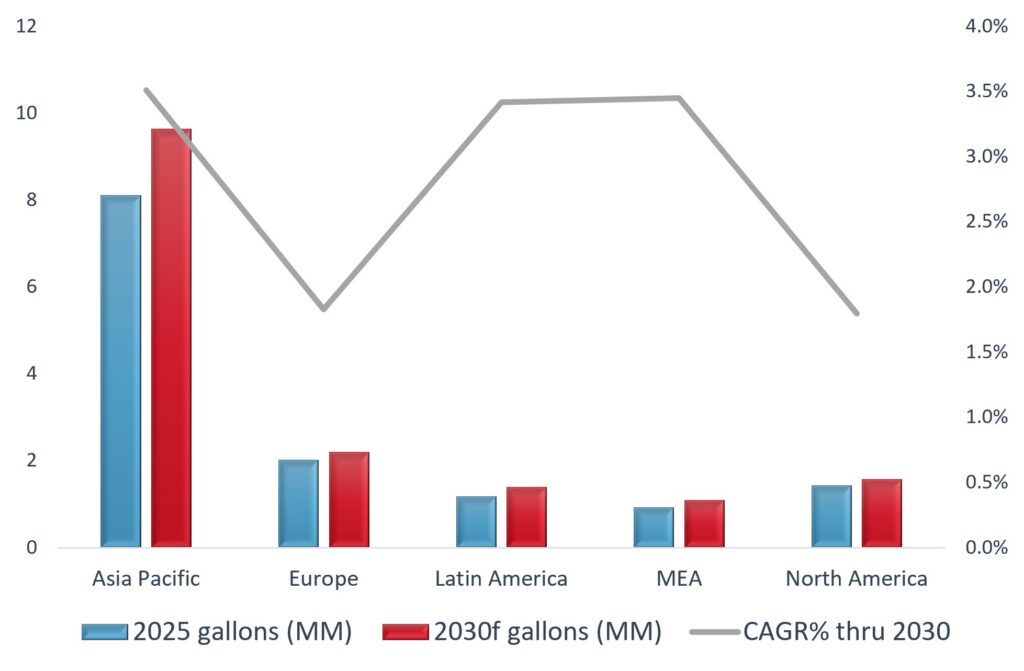
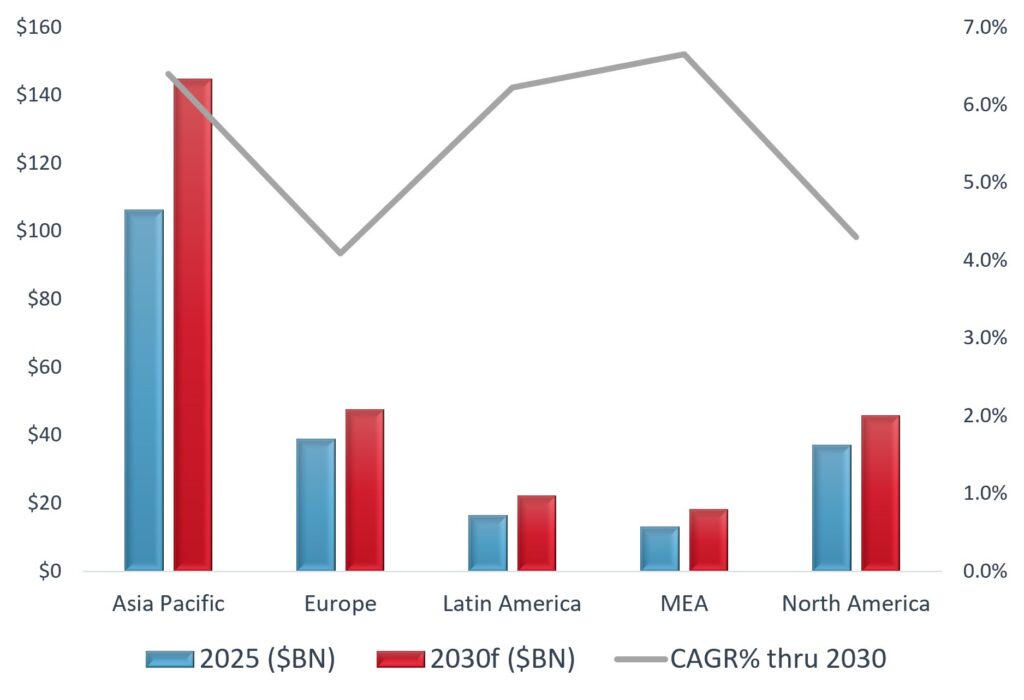
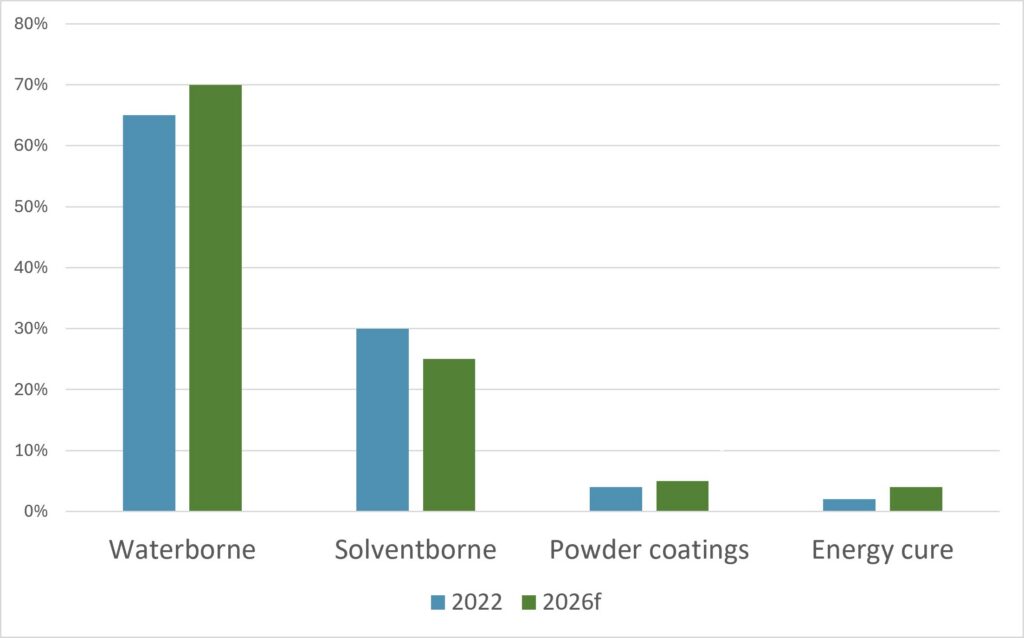
In terms of coatings technologies, usage varies by end-use application. Architectural emulsions account for more than 50% of total coatings consumption, representing a key driver for the increasing use of waterborne coatings. Solventborne products still are commonly used in industrial coatings segments, but their use may have peaked as technologies that are considered more environmentally friendly continue to make inroads. Energy-cure coatings (UV/LED, EB, IR) are estimated to have grown by 50% since 2022, though from a much smaller base (Figure 3).
Focus on OEM Coatings
The coatings market generally is categorized into three main segments: architectural, OEM and special purpose. Architectural is by far the largest segment, while special purpose (including end-use applications like automotive refinish, industrial maintenance and protective, and marine) over-indexes in terms of value due to the specialized nature of many of the products (Figures 4 and 5).
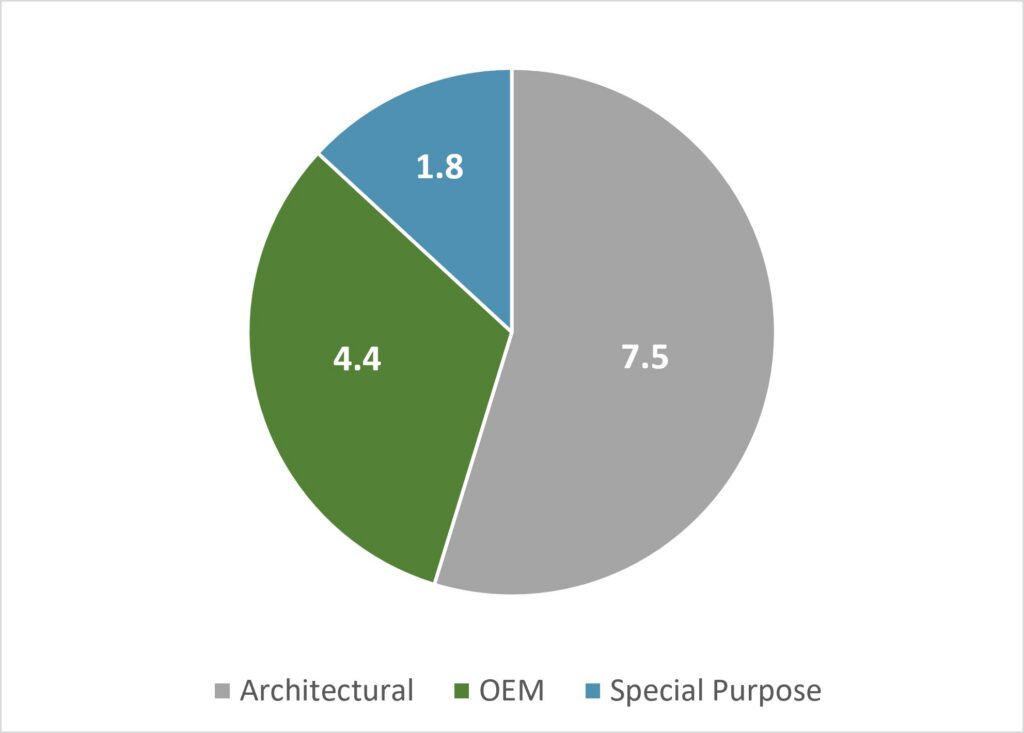
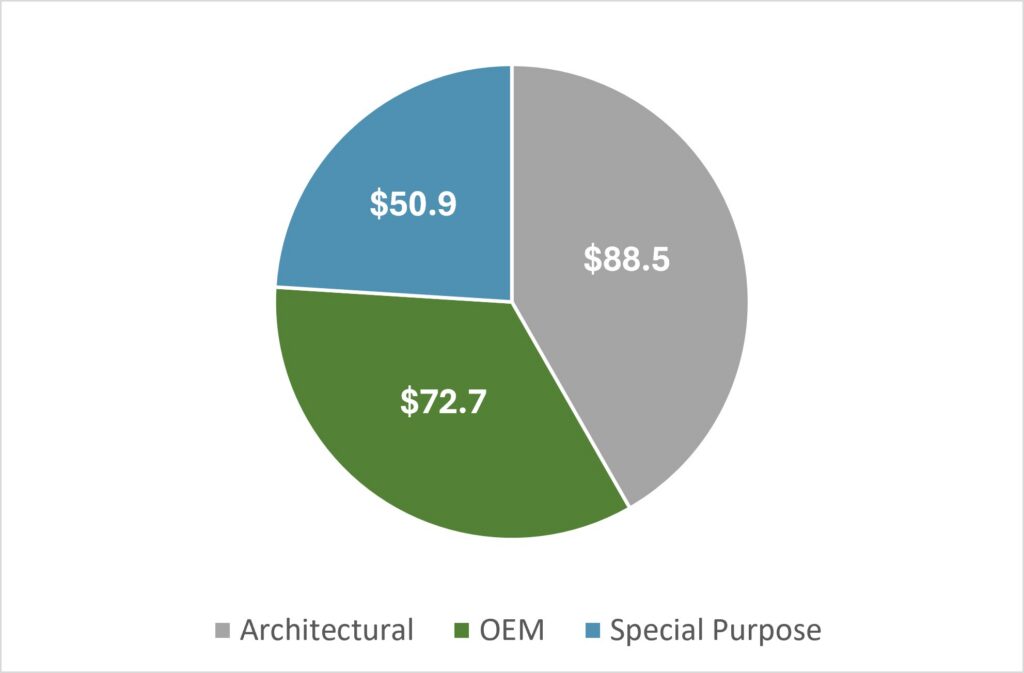
($ billions). Source: The ChemQuest Group, Inc.
Since energy-cure is most prevalent in OEM coatings, this article focuses primarily on that segment. Representing the second-largest segment in terms of both volume and value, OEM coatings are used in applications such as automotive OEM, coil, general industrial, packaging, wood and others.
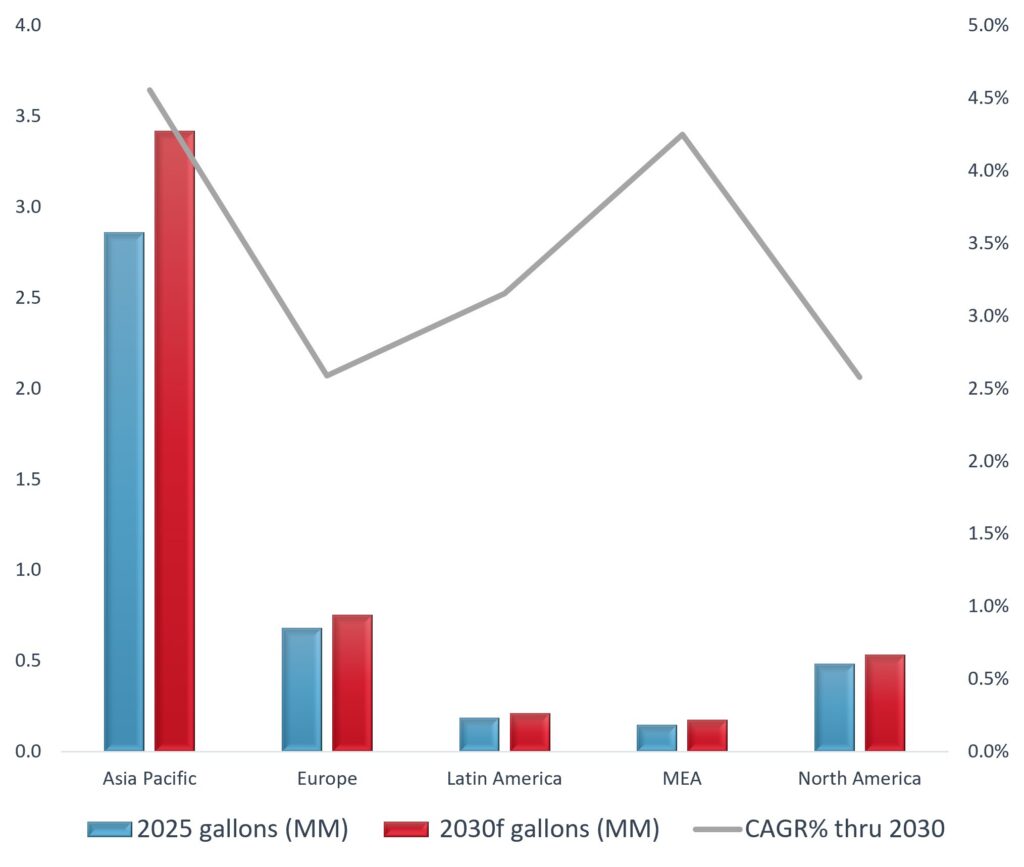
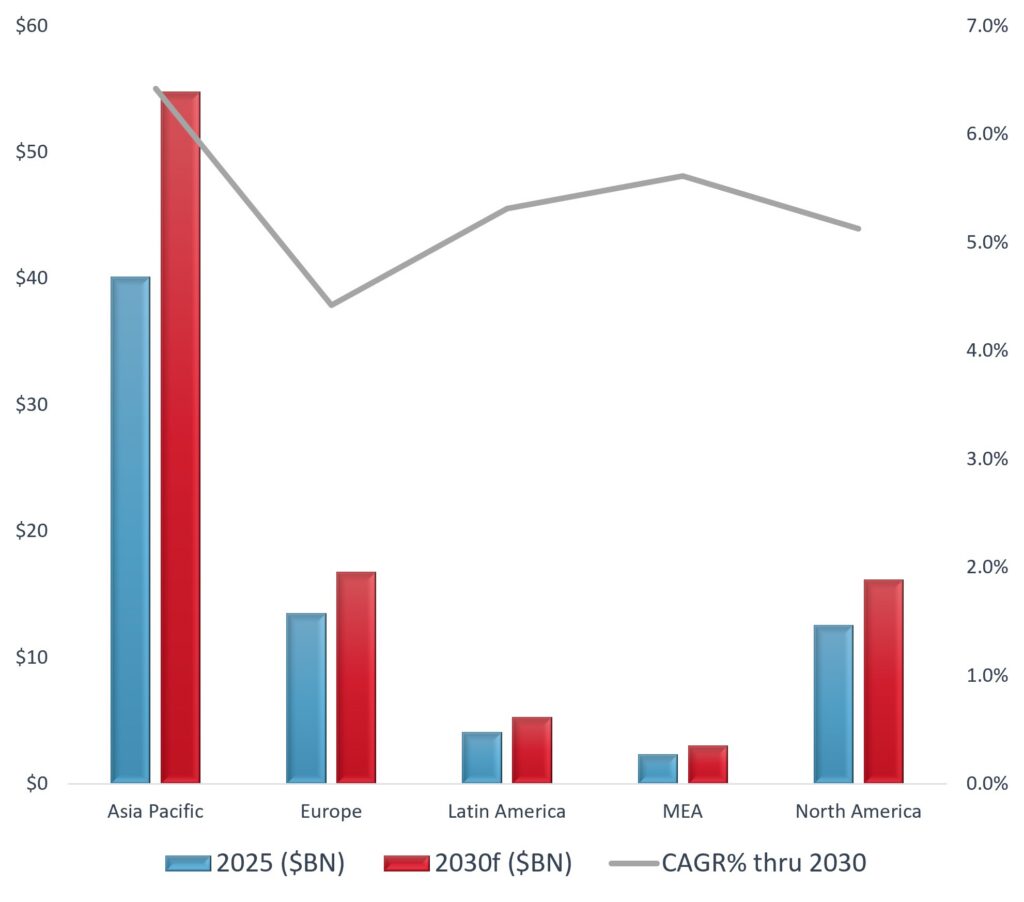
Globally, OEM coatings demand reached $72.7 billion in 2025, representing 4.4 billion gallons worldwide (Figures 6 and 7). A strong compound annual growth rate (CAGR) of 5.9% is projected to expand the market to $96 billion in 2030.
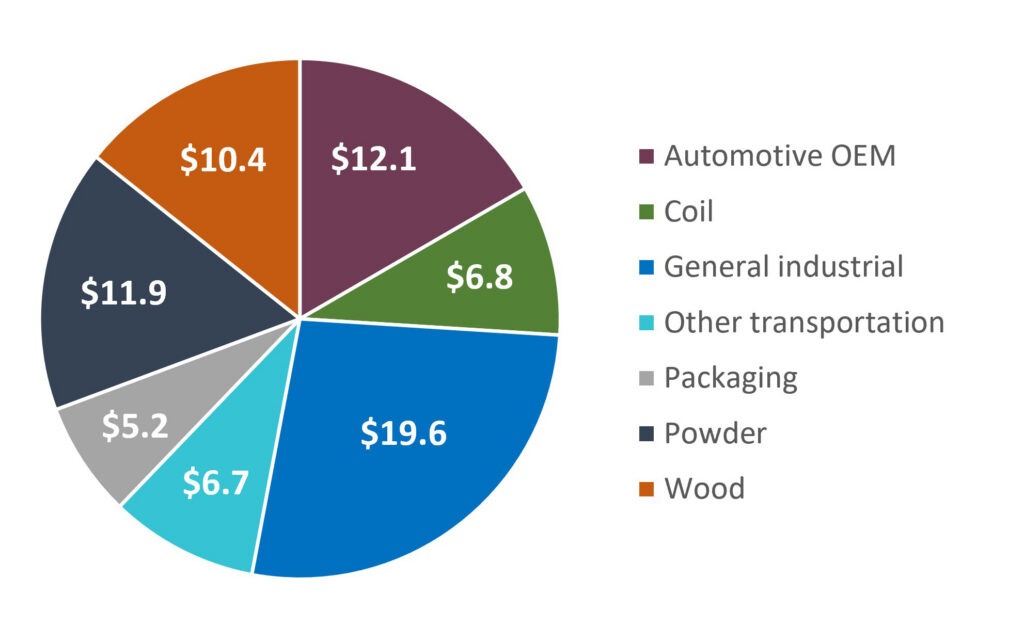
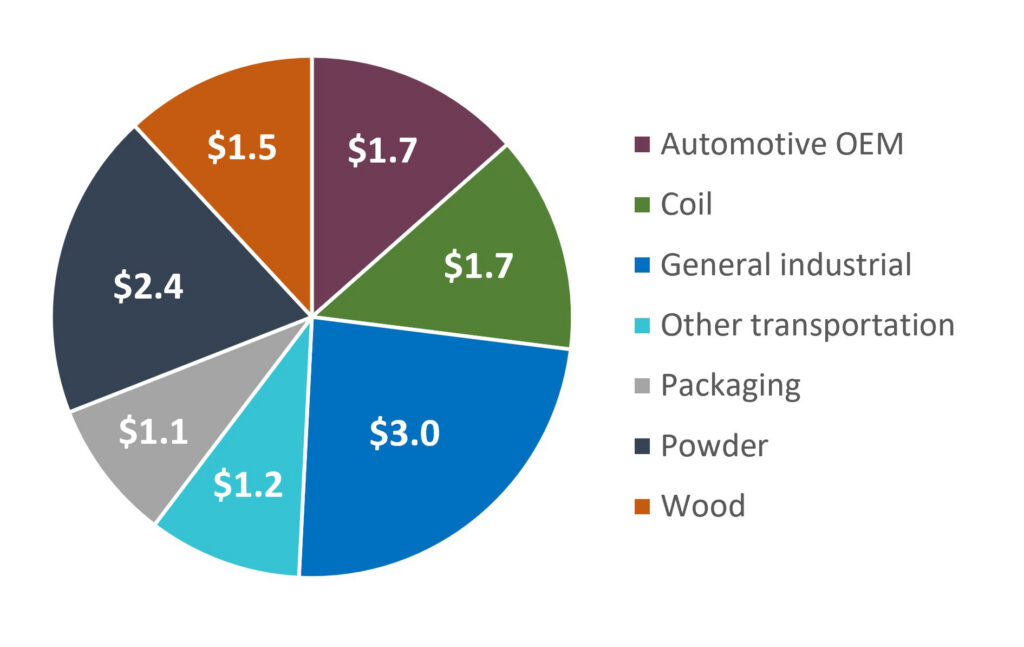
Global end-use applications for OEM coatings surprisingly are not dominated by the general industrial category, which includes applications that do not readily fit into any of the other sectors (Figure 8). Following general industrial’s 2025 value of approximately $19.6 billion are automotive OEM at $12.1 billion, powder at $11.9 billion and wood at $10.4 billion.
In North America, which represents approximately 17% of the global OEM coatings market, coil and powder hold slightly larger shares of the market than the global split, proportionally, primarily pulling from general industrial (Figure 9).
Regional Dynamics
While overall growth is anticipated for the global coatings market, regional dynamics are influencing where that growth will occur.
Asia Pacific
The Asia-Pacific region represents, by far, the largest consumer of coatings worldwide. The overcapacity of China’s chemical industry as a result of unprecedented capacity expansion, particularly in petrochemicals and polymers, is leading to intense competitive rivalry, as well as lower prices and profit margins. Domestic demand for chemicals in China is failing to absorb this massive new output. Subsequently, six facility closures are planned across a diverse range of chemicals.
Compounding these challenges are petrochemical shortages due to the closure of the Strait of Hormuz, critical for Asia due to its dependence on naphtha and LNG from the Middle East. Asia is experiencing the most significant price increases and availability constraints of any of the major global regions due to the closure, with resin and solvent supply chains (including acrylics, polyesters, epoxies and alkyds) hugely impacted. For coatings producers in the region, raw material prices are surging (some by up to 85%).
Despite these challenges, the OEM coatings market in the Asia-Pacific region is expected to see strong growth of 6.4% by value, growing from $40.1 billion in 2025 to $54.8 billion in 2030. The 2025 volume of 2.9 billion gallons will expand at a more modest rate of 4.6% in this timeframe.
Europe
The European chemical industry also is experiencing significant challenges, though of a different nature. Here, massive oversupply due to weak demand in the region is exacerbated by expanded competing capacities (particularly, and unsurprisingly, from China). A heavy regulatory burden and high energy and labor costs represent additional challenges for producers in the region.
The resulting closures at 21 sites across Europe, representing 37 KMt of capacity, are impacting a diverse range of chemicals, including ethylene, propylene, aromatics and many others. These upstream shutdowns increase supply risks for downstream resin, solvent and additive makers, leading to continuing volatility and rationalization across the entire coatings industry.
Like Asia, Europe also is disproportionately affected by the Strait of Hormuz shipping disruptions, as it is highly reliant on imported oil, LNG and petrochemical intermediates. In addition, with increasing pricing pressure from China, automotive OEM production in Europe is becoming challenged.
Europe’s OEM coatings market reached 700 million gallons valued at $13.5 billion in 2025. While value is expected to see a 4.4% CAGR through 2030 as formulators pass along increasing costs, volume is anticipated to grow by just 2.6%.
North America
North America’s chemicals industry is not plagued by structural challenges, and the region also is much less impacted by Middle Eastern feedstock supply disruptions. That said, producers are seeing higher freight costs, as well as some increasing costs for imported aromatics and specialty intermediates. Cost inflation is becoming evident for resins and solvents associated with global crude and petrochemicals.
The growth outlook for the North American coatings industry shows increasing uncertainty, with the architectural segment particularly plagued by headwinds such as historically low home turnover. The situation for industrial/OEM coatings is more positive, however, with some economic indicators providing reason for optimism.
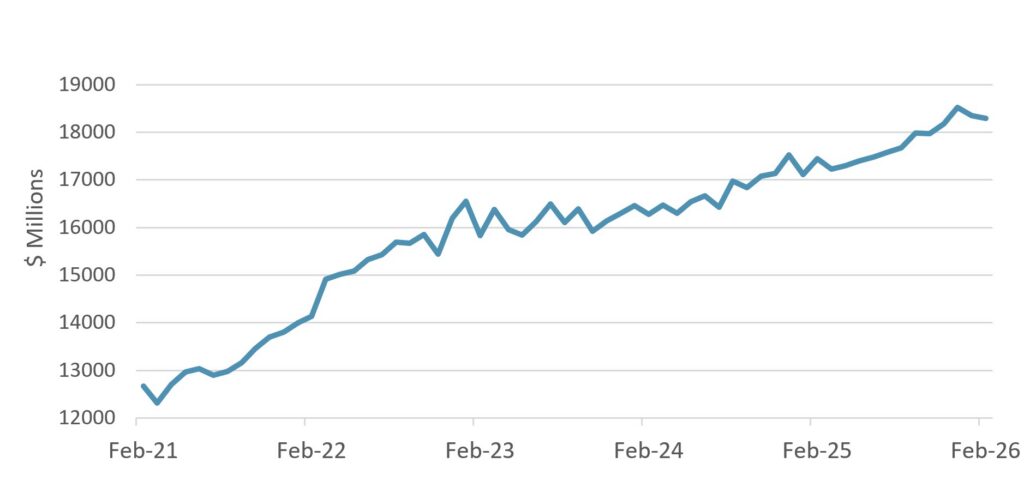
For example, manufacturing capital expenditures (CapEx) in the United States are seeing a surge, with data center construction and federal policy initiatives helping to push project spending to over $800 billion early this year (representing a year-over-year increase of 106%). In addition, in January, new orders for durable goods reached a new high in North America (Figure 10).
The OEM coatings market in North America reached approximately 500 million gallons valued at $12.6 billion. A 5.1% CAGR is anticipated to expand market value to $16.2 billion by 2030, while volume is anticipated to grow at a more modest 2.6%.
Looking to the Future
Sustainability is the key driver for the global coatings industry, and OEM coatings are no exception. As previously mentioned, there is a growing push toward energy-cure coatings. The potential of doing away with the traditional long and costly cure times often required with conventional ovens enables manufacturers to improve energy efficiency and reduce their carbon footprints while also demonstrating to consumers that they offer environmentally friendly products.
Coupled with labor shortages, the goal of optimizing productivity and efficiency is spurring increasing digitalization and automation across the industry. The increasing ability to effectively integrate software with machines has provided opportunities in coatings formulation, application and evaluation. In addition, producers are turning to artificial intelligence (AI) and other machine learning platforms to drive efficiencies ranging from ingredient selection to color palette creation.
As mentioned previously, growth in US manufacturing and upbeat demand for durable goods bodes well for OEM coatings. In addition, CapEx availability translates to companies having the resources needed to invest in retrofitting traditional coatings lines to energy-cure processes.
Reference
- “World Economic Outlook: Global Economy in the Shadow of War,” International Monetary Fund, April 2026, https://www.imf.org/en/publications/weo/issues/2026/04/14/world-economic-outlook-april-2026.

James Swope is the chief commercial officer at The ChemQuest Group, Inc. With nearly 40 years of successful B2B experience, mostly in adhesives, sealants and coatings, Swope has deep expertise in lean sales and marketing execution, as well as “Blue Ocean” strategy. He brings a unique financial view to his work, born from undergraduate training in accounting as well as 19 years of ownership/management of Crosslink Technologies, Inc., a niche supplier of reactive adhesive systems for assembly. He served as senior vice president of Business Development at Dymax Corp. following the sale of Crosslink Technologies to Dymax in 2006. For more information, email jswope@chemquest.com or visit www.chemquest.com.