



RadTech International North America (RadTech) provides resources to members and to the industry regarding regulatory, health and safety updates. Recent postings on RadTech.org offer information on BACT, TPO and ozone emissions. BACT Listings for UV/EB What is BACT? BACT (Best Available Control Technology) is a regulatory requirement under the Clean Air Act, referring to the … [Read more...] about Health & Safety Resources from RadTech
Articles
Investigation of UV-C LED as a Source to Cure UV Hot-Melt Pressure-Sensitive Adhesives
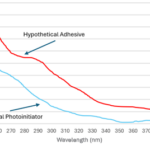
By Zachary Gatland, product development scientist, Mactac North America Ultraviolet-cured hot-melt pressure-sensitive adhesives (UV-HMPSAs) are acrylic pressure-sensitive adhesives that can be delivered and coated as a 100% solid hot melt and cured with UV radiation. In recent years, the UV-HMPSA market has expanded, and many more commercial UV-HMPSAs have become available to … [Read more...] about Investigation of UV-C LED as a Source to Cure UV Hot-Melt Pressure-Sensitive Adhesives
Viscous Lithography Manufacturing: High-Viscosity Resins for High-Performance Parts

By Liz Stevens, writer, UV+EB Technology Supernova, based in Austin, Texas, is redefining additive manufacturing with its Viscous Lithography Manufacturing (VLM) process. By combining its ultra-high-viscosity Viscogel photopolymer resins with its Pulse One 3D printer, modular Postprocessing Cell and Control Center application, the system delivers parts with … [Read more...] about Viscous Lithography Manufacturing: High-Viscosity Resins for High-Performance Parts
Regulatory News – 2026 Quarter 1

Note: Thank you to Jennifer Heathcote, RadTech’s Board of Directors’ Secretary, for collaborating on this issue’s column. Metal Coatings Rulemaking and Win for Test Method The South Coast Air Quality Management District (SCAQMD) board recently adopted amendments to the Metal Coatings Rule (Rule 1107). The rule regulates Volatile Organic Compound (VOC) emissions from metal … [Read more...] about Regulatory News – 2026 Quarter 1
UV LED Measurement, Part 2: How Good is Good Enough?
Editor’s note: Part 1 of this column appeared in the Q3 2025 issue of UV+EB Technology and stressed the importance of using a measurement instrument optimized for the source. Many companies already have a radiometer for broadband (mercury) sources. In most cases, this is not the right tool for measuring UV LEDs. Only you can decide if the values on your broadband radiometer … [Read more...] about UV LED Measurement, Part 2: How Good is Good Enough?