


Compiled with assistance from Dr. Linkan Bian, National Science Foundation In collaboration with the National Institutes of Standards and Technology, a key component of PAMA activities is to foster public/private partnerships and academic research in the area of photopolymer additive manufacturing (PAM) technology. The National Science Foundation (NSF) has been an important … [Read more...] about University Research Activities Funded to Advance PAM
2023 Quarter 3
Yumwoof: Good for Dogs and the Environment with Help from EB Curing

By Liz Stevens, writer, UV+EB Technology Yumwoof Natural Pet Food, based in Austin, Texas, makes premium air-dried dog foods. The company’s recipes are non-GMO and personalized based on a pet’s individual characteristics, applying data from extensive analysis of veterinary clinical studies. Yumwoof’s Perfect Kibble – an air-dried superfood packed with Cocomega™ superfats … [Read more...] about Yumwoof: Good for Dogs and the Environment with Help from EB Curing
Sustainability in Packaging: Inks for Food Packaging
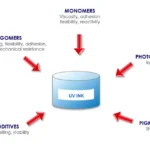
By Carla Brown, Manager, Corporate Communications – Circular Economy Specialist, Siegwerk Druckfarben AG & Co. A note from RadTech: The RadTech Sustainability Committee is embarking on our group’s sustainability journey, and we thank Carla Brown, manager, Corporate Communications – Circular Economy Specialist, Siegwerk Druckfarben AG & Co., for sharing her work in a … [Read more...] about Sustainability in Packaging: Inks for Food Packaging
Smart Glass Labs Offers an Exceedingly Smart Window
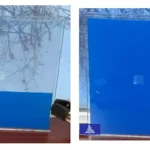
By Liz Stevens, writer, UV+EB Technology “You make a better door than a window.” This phrase, commonly heard in households where one family member blocks another’s view of the TV, hinges on the fact that a door blocks while a window reveals. But what if a window could also be a door? What if a window could become fully opaque on demand, offering complete privacy? What … [Read more...] about Smart Glass Labs Offers an Exceedingly Smart Window
Incorporation of Carbon Nanotubes into UV-Polymerizable Formulations: Part 1
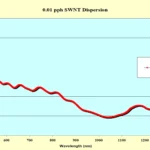
The most common allotropic form of the element Carbon is graphite. This inorganic polymeric material is found in all pencils, where it mistakenly is called “lead.” Despite being a non-metal, it also is an excellent conductor of electricity and is used as an electrode in laboratory and industrial settings. The usefulness of graphite in pencils comes from the fact that its … [Read more...] about Incorporation of Carbon Nanotubes into UV-Polymerizable Formulations: Part 1