


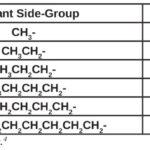
In the last two installments of Professor’s Corner, the concept of the glass transition temperature (Tg) was introduced and discussed.1, 2 That discussion continues as we look at the structural and compositional factors that influence the Tg – factors such as polymer backbone rigidity, morphology, cross-link density and pendant side-group length, shape and polarity. Since the … [Read more...] about Understanding Glass Transition Temperature: Part 3
Professor's Corner
Understanding Glass Transition Temperature: Part 2
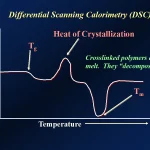
In the last edition of Professor’s Corner, we began a discussion of the glass transition temperature (Tg).1 In this issue, we will continue that discussion by investigating three methods for experimental measurement of this all-important polymer property: 1) Dilatometry; 2) Differential Scanning Calorimetry (DSC); 3) Dynamic Mechanical Analysis (DMA). These three methods are … [Read more...] about Understanding Glass Transition Temperature: Part 2
Understanding Glass Transition Temperature: Part 1
In a previous edition of Professor’s Corner, a simple rubber band was used to illustrate how its macromolecular structure creates its unique properties.1 Among the most important and useful of these properties is its flexibility. The flexibility is a result of a very low glass transition temperature (Tg). While different rubber bands have different compositions and behave … [Read more...] about Understanding Glass Transition Temperature: Part 1
Changing Polymer Properties through Manipulation

In the first three editions of this column, the groundwork for better understanding the nature of polymers – vis-à-vis lower molecular mass materials – was laid. In this edition, we will look at factors that chemists, chemical engineers and materials scientists can, in principle, manipulate to change polymer properties. These include changes that can be made in composition, … [Read more...] about Changing Polymer Properties through Manipulation
Structure and Property Relationships for Polymers
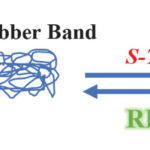
The second edition of “Professor’s Corner” included a discussion about the fundamental physical property differences between low molecular mass materials and polymers1. These included differences in flexibility, melting point and glass transition temperature (Tg), as well as the rheological properties of liquids or solutions. In this edition, we will take a closer look at … [Read more...] about Structure and Property Relationships for Polymers