


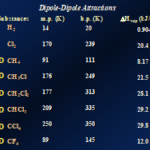
In this edition of “Professor’s Corner,” a discussion of Intermolecular Attractive Forces is continued. In Part 11, the subject was introduced, and London Dispersion Forces (LDFs) were discussed. These are the forces of attraction exhibited by all atomic, ionic or molecular materials, even those that are completely non-polar. In this edition, we will look at the attractive … [Read more...] about Intermolecular Attractive Forces: The Key to Understanding Polymer Properties, Part 2
Professor's Corner
Intermolecular Attractive Forces: The Key to Understanding Polymer Properties, Part 1
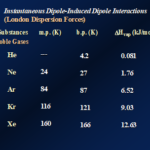
To understand the nature of solids and liquids, the forces of attraction holding the component atoms, molecules and/or ions together must be considered. Without these forces, only gases would be possible, and the universe would be a very different place. So, for solids and liquids to exist at all, gaseous species must have the inherent ability to attract one another strongly … [Read more...] about Intermolecular Attractive Forces: The Key to Understanding Polymer Properties, Part 1
Understanding Glass Transition Temperature: Part 3
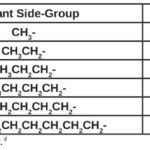
In the last two installments of Professor’s Corner, the concept of the glass transition temperature (Tg) was introduced and discussed.1, 2 That discussion continues as we look at the structural and compositional factors that influence the Tg – factors such as polymer backbone rigidity, morphology, cross-link density and pendant side-group length, shape and polarity. Since the … [Read more...] about Understanding Glass Transition Temperature: Part 3
Understanding Glass Transition Temperature: Part 2
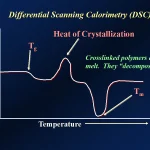
In the last edition of Professor’s Corner, we began a discussion of the glass transition temperature (Tg).1 In this issue, we will continue that discussion by investigating three methods for experimental measurement of this all-important polymer property: 1) Dilatometry; 2) Differential Scanning Calorimetry (DSC); 3) Dynamic Mechanical Analysis (DMA). These three methods are … [Read more...] about Understanding Glass Transition Temperature: Part 2
Understanding Glass Transition Temperature: Part 1

In a previous edition of Professor’s Corner, a simple rubber band was used to illustrate how its macromolecular structure creates its unique properties.1 Among the most important and useful of these properties is its flexibility. The flexibility is a result of a very low glass transition temperature (Tg). While different rubber bands have different compositions and behave … [Read more...] about Understanding Glass Transition Temperature: Part 1